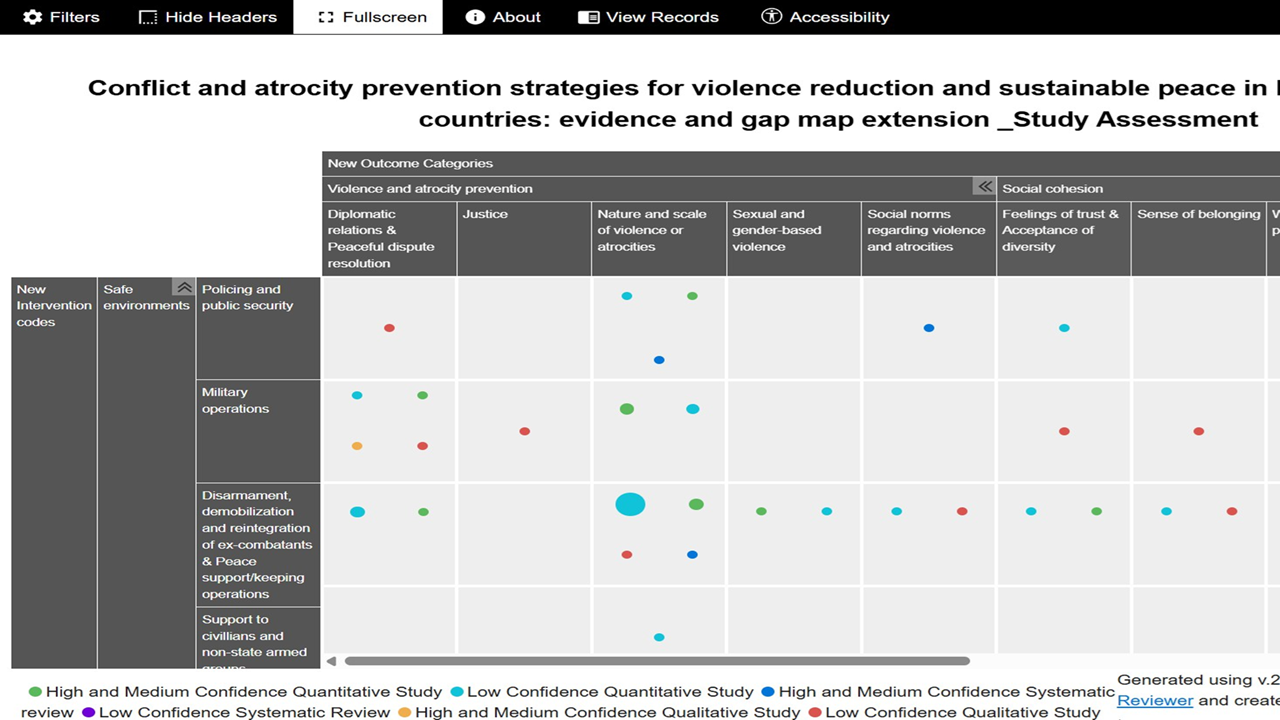
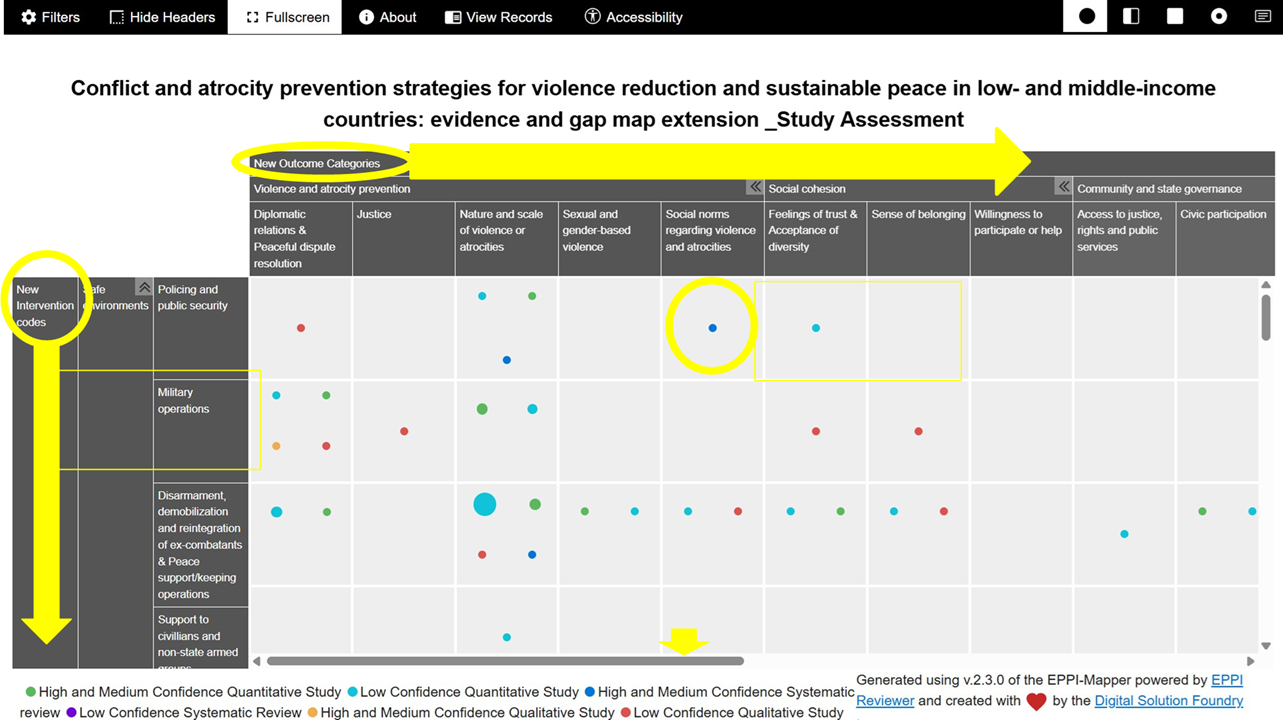
The Evidence and Gap Map (EGM) compiles evidence on interventions designed to prevent conflict and atrocities and arranges it in a format that is easy to explore. It connects each intervention with the outcomes it has been shown to influence, such as lowering levels of violence or improving social cohesion. This structure makes it easier to compare strategies and understand the strength of the existing research. The graphic below provides a guide to moving through the map.
Viewing a Study
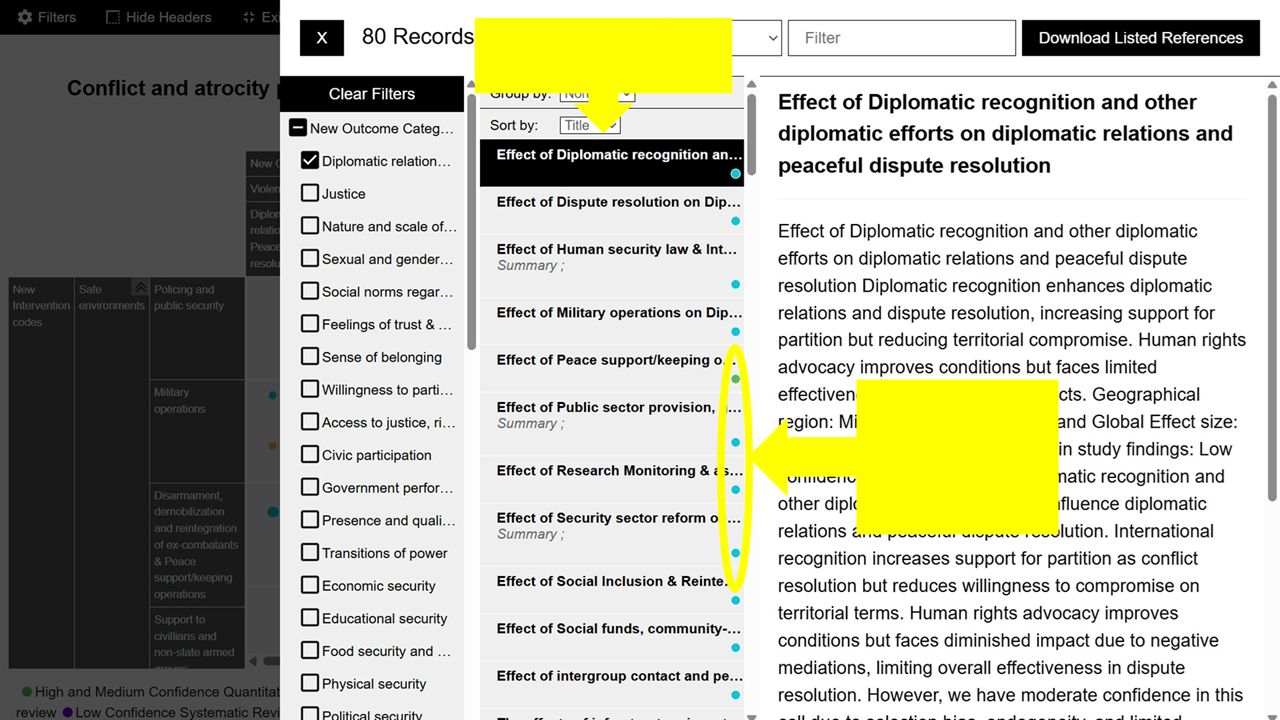
If the cell contains only one or two studies, the pop-up box will list them. For each study, the column on the right has the study abstract. (This is a summary of the study which is published at the top of the study and is written by the study’s authors.) Against each one is a blob, the colour of which indicates the confidence level of the study.
Viewing the Cells
To see the studies in a particular cell, just click on that cell. A list of the studies will come up.
Confidence Level of the Studies
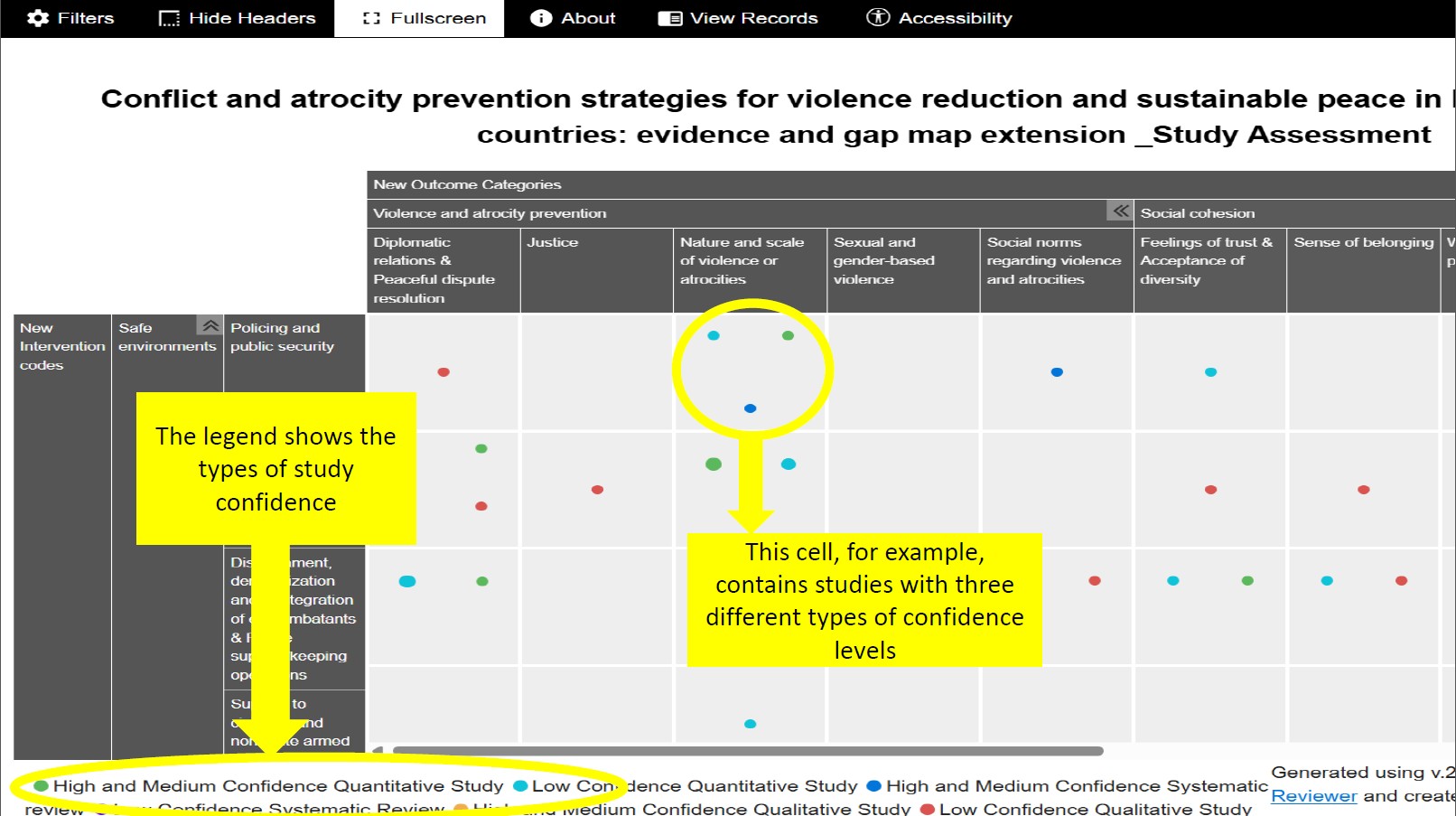
The EGM contains various types of Confidence Level of the study:
High and Medium Confidence Quantitative Study
Low Confidence Quantitative Study
High and Medium Confidence Systematic review
Low Confidence Systematic Review
High and Medium Confidence Qualitative Study
Low Confidence Qualitative Study
Intervention – Types and Outcomes
The Evidence and Gap Map (EGM) organises the studies according to:
The Intervention Type (eg: Safe Environments). These are the
The Outcome/s Studied (eg: Diplomatic Relations and Peaceful Dispute Resolution, Justice). These are the columns.
If a study examines the effect of an intervention (say, Safe Environment – Policing and Public Security) on an outcome (say, Diplomatic Relations and Peaceful Dispute Resolution), we put that study in the relevant cell. That cell contains all the studies which examine the effect of an intervention on that outcome: each one is shown by a dot (or square, if you change the view).